Tustin, CA · Garage Door Service
Why Tustin Garage Doors Draft Even Without Cold Weather
In Tustin's mild climate, garage door seals fail from UV and heat cycling, not frost - common in 1960s-70s era doors around town. Here's what causes drafts.
- Repairs & new doors
- Springs & openers
- Serving 6 nearby communities
When to Call Someone
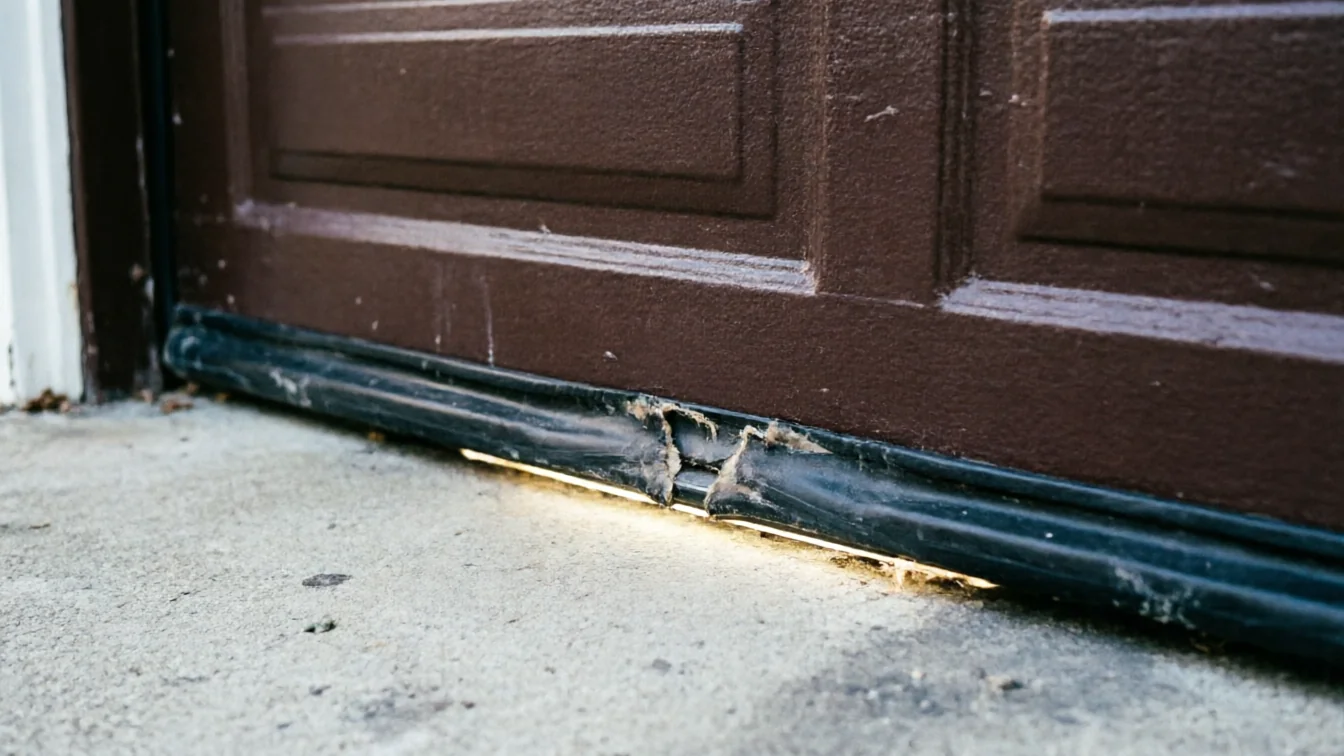
If you can see daylight around the bottom of the door when it's shut, or you feel air moving across the garage floor on a windy day, the seal has already failed - you're not catching it early. Call before you get to that point if the rubber bulb along the bottom has gone stiff, cracked, or pulled loose from the track, or if the vinyl strip along the sides has shrunk back from the jamb enough to leave a visible gap at the corners.
A lot of Tustin houses sit at a median build year of 1971, so if yours is anywhere near that range, check the side seals first - they're usually original or a prior owner's cheap replacement, and neither holds up forever. If the gap is only at one corner and the rest of the seal looks fine, that's often a track alignment problem, not a seal problem, and worth a call rather than a DIY strip replacement that won't fix the real issue. If the whole bottom astragal is cracked end to end, that's a straightforward swap - don't wait for it to let in dust and pollen along with the air.
What Local Conditions Do
Tustin sits in a mild temperate band, which changes what actually wears a seal out here compared to places with hard winters. Nobody's seals here are splitting from ice expansion. What gets them instead is UV exposure and daily heat cycling - the door skin and the frame heat up and contract every single day, year-round, and the rubber or vinyl seal pressed between them takes that flexing over and over until it loses its memory and stops springing back.
Across the 38 named areas in this part of the county, most of the housing stock dates to the 1960s and 70s, and a huge share of those garages still have their original jamb material - often wood, sometimes early aluminum - rather than the steel channel you'd find on anything built after 2000. Wood doesn't hold a seal track as tightly as steel, and it moves more with heat, so the gap reopens faster than it would on newer construction. Closer in, around North Tustin and Tustin Legacy, you get a mix of older and newer builds, so the seal problem looks different house to house depending on which decade the garage actually went up in.
The Cost of This Job
I'm not going to put a number here I don't have - what a seal job runs depends on the door width, whether it's a single or double, what track system is on it, and whether the jamb underneath needs any repair before a new seal will even sit right. A straight strip swap on a door that's otherwise sound is a different job than one where the jamb has warped enough that the new seal won't seat flush no matter what you put in.
What I can tell you is what drives the cost up: if the garage is one of the older builds with a wood jamb, sometimes the wood has to be shimmed or partially replaced before the new seal does any good, and that adds labor beyond the seal itself. If it's a newer steel-jamb door, the seal swap is usually quick and contained. Either way, it's worth having someone look at the actual gap in person before guessing at a price over the phone - a seal that looks fine from six feet away can still be letting in air at the one spot you can't see from inside the garage.
What Is Going On
The short version: a seal that was fine for thirty years doesn't fail because something broke - it fails because heat cycling finally used up the rubber's ability to flex back. Given that median year-built here is 1971, a lot of these doors have had five decades of that cycling, and the seal has simply reached the end of its working life, original or not.
The draft itself usually isn't dangerous, but it's not nothing either - it's letting in dust, pollen, and small pests along with the air, and if the garage shares a wall with living space, it's also pulling conditioned air out of the house through that gap. On older wood-jamb doors the fix is sometimes bigger than the seal, because the wood itself has shrunk or split enough that no strip will seat right against it. On the newer steel-jamb builds closer to Orchard Hills and Tustin Legacy, it's almost always a straight seal swap, no structural work needed. Knowing which situation you've got before you start is most of the job.
Frequently asked questions
Why does my garage door seal keep failing even though Tustin doesn't get hard winters?
It's not cold that's breaking it down - Tustin's mild temperate climate still puts the door through daily heat cycling, with the skin and frame expanding and contracting every day. That constant flexing is what wears out the rubber or vinyl over years, not frost or ice, which is why the seal fails even in a climate most people wouldn't call harsh.
My house was built in the 60s - is the jamb underneath the seal original?
It's possible. A lot of the housing stock in this area dates to the 1960s and 70s, median build year 1971, and many of those garages still have the original wood jamb rather than a steel channel. If the jamb is original, a new seal strip alone sometimes won't seat tight, because the wood has moved over the decades.
Is a draft around the garage door actually worth fixing?
Yes, more than people assume. Beyond comfort, a bad seal lets in dust and small pests, and if the garage shares a wall with living space, it's pulling air through that gap too. It's a cheap fix compared to most garage door repairs, so there's little reason to leave it once you've spotted the gap.
Related garage door services in Tustin
More garage door guides
Book garage door service in Tustin
Call now or request a quote - tell us what the door is doing and where you are.